Wireless Communications (EIM)
Sep 1, 2022·

Christopher Knievel
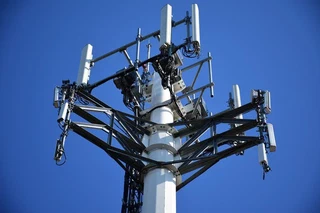 Image credit pixabay.com
Wireless Communications (EIM)
Subject-specific Competencies
Students
- have acquired a fundamental knowledge about key aspects of the physical layer of contemporary wireless communication systems.
- design and analyse the signal processing applied in modern digital radio communication systems under different constraints
Methodological Compentencies
Students
- will be able to understand the meaning or relevant features and aspects of mobile and wireless communication standards and make informed judgments about their suitability for different communication tasks.
- will be able to evaluate overall system performance of communication systems.
Interdisciplinary Competencies
Students
- can evaluate solutions in highly complex environments
- are able to acquire detailed knowledge for solving specific problems on their own
- learn to discuss and derive solutions within a team
Course Content
- Introduction: History of wireless communications. From classical radio to modern cellular communication systems
- Propagation, Antennas & Wireless Channels: From single antenna channels to multipath multi-antenna channel models, propagation models, path loss, multipath effects
- Digital Modulation in the Baseband: Introduction of basic concepts. N-QAM and N-PSK modulation. Metrics and Limits of Modulation schemes
- Multi-antenna Techniques (MIMO): Receive and transmit diversity. Beamforming, Detection
- Multi-user Systems: OFDMA, CDMA, TDMA, SDMA
- Cellular Systems: 5G and beyond, 5G key technologies
- Current research topics: Terahertz signal transmission, AI core networking and network management
More information as well as lecture noted are available in the moodle course.
Lecture
| # | Name | Summary |
|---|---|---|
| 1 | Fading Channels | Single-antenna systems, path loss, shadowing |
| 2 | Multipath Channel Models | Doppler Shift, Rayleigh and Rician fading, Jakes model, WINNER Multipath channel models |
| 3 | Modulation | Common modulation formats e.g. ASK, PSK, QAM, average error probability, coherent and differential detection |
| 4 | Diversity | Multi-antenna setups, Diversity Combining, V-BLAST |
| 5 | Multicarrier Modulation | OFDM basics, OFDM transmitter and receiver, adaptive rate and power allocation |
| 6 | Channel Coding | Block Codes, convolutional codes |
| 7 | MIMO Systems and Detection | Maximum Likelihood detection, Linear Receivers, ZF and MMSE |
| 9 | MIMO Beamforming | Analog and digital beamforming, max-SNR MMSE beamforming |
| 10 | Multiuser Systems | Introduction of various multiplexing schemes such as CMDA, TDMA, SDMA, OFDMA |
| 11 | Cellular Systems | Introduction to cellular systems |
| 12 | 5G and Beyond | 5G key technologies, Massive MIMO, AI for Wireless Communications |
Lab Work
For the majority of lab session, we will use Matlab and corresponding Matlab toolboxes.
| # | Name | Summary |
|---|---|---|
| 1 | Channel Models | Impact of time-dispersive frequency-selective channels |
| 2 | Modulation and BER | Monte-Carlo simulation with higher-order modulation |
| 3 | Diversity and OFDM | MIMO-OFDM transmitter and receiver |
| 4 | Coded MIMO-OFDM | Convolutional channel code in combination with MIMO-OFDM |

Authors
Professor for Autonomous Systems
My research interests include situation assessment, computational intelligence, and machine learning applied for (mobile) autonomous systems.